
Actor Headshots · Wardrobe
A practical guide to colours, necklines, layers and clothing choices that support casting without distracting from the person in the photograph.
Chris Barroccu · BBC & ITV Lighting Director · South Wales

What you wear for actor headshots matters, but not because the clothing needs to look expensive or fashionable. Its job is to support the face, the expression and the way you want to be understood professionally.
The best wardrobe choices usually feel simple, intentional and recognisably like you. They give the photograph enough visual structure without becoming the first thing somebody notices.
01 · Start with the face
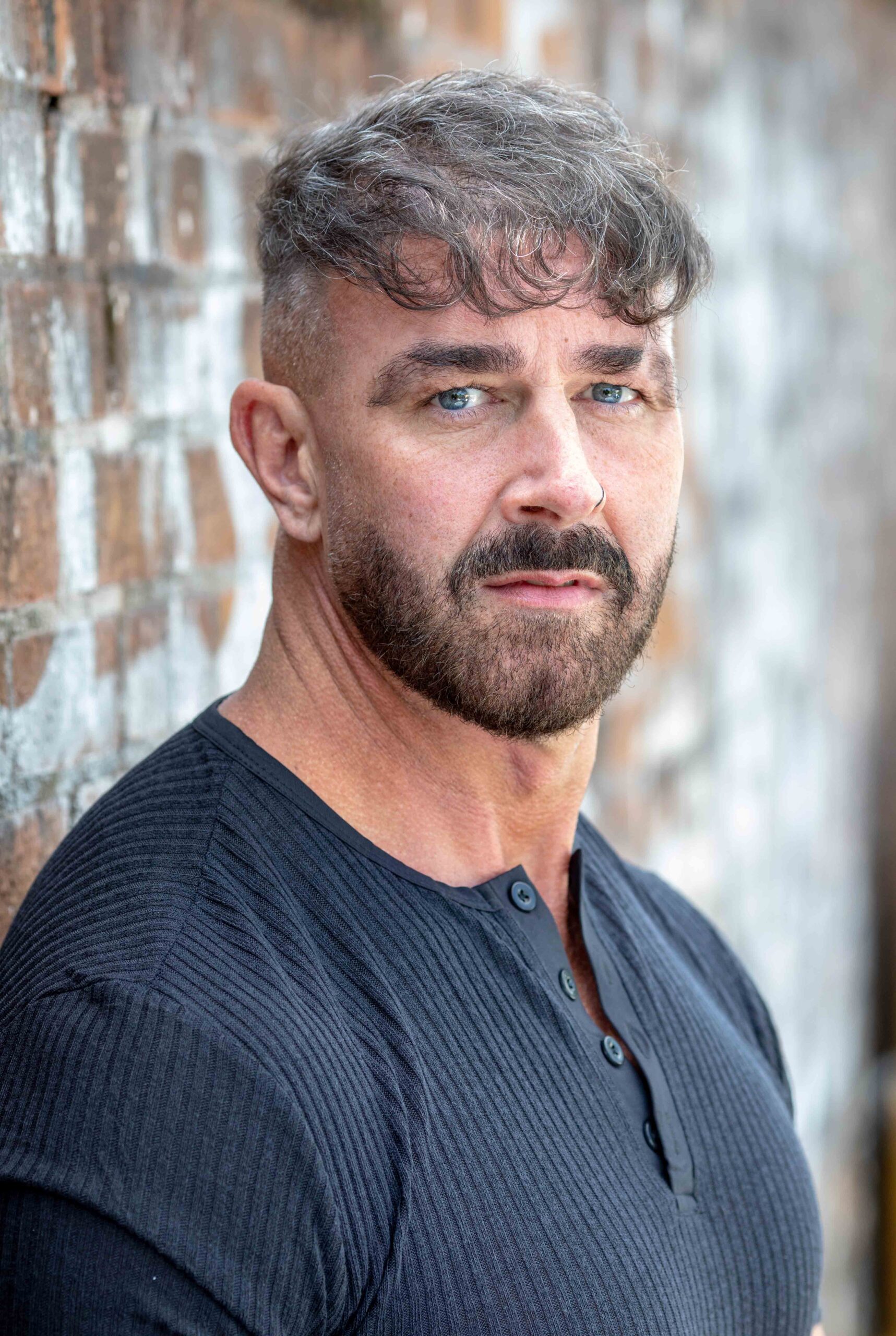
Actor headshots are about the person. Clothing helps shape the frame, but if a shirt, logo, pattern or accessory becomes the most memorable element, it is competing with the reason the photograph exists.
Simple clothing often works well because it gives the face more room to lead. That does not mean everything has to be plain black or neutral. Colour and texture can be useful when they feel appropriate to you and the overall tone of the image.
A useful wardrobe choice adds context without asking for attention.

02 · Colour
Colour can change the balance of a portrait. Very bright or highly saturated clothing can pull attention away from the face, while colours that sit more naturally with your skin tone and colouring can help the image feel more coherent.
You do not need to avoid colour. The question is whether the colour supports you. Muted tones, richer neutrals and restrained colour often photograph beautifully because they create separation without overwhelming the frame.
If you already know there is a colour you are repeatedly complimented in, bring it. If a colour makes you look tired or washed out in everyday life, a headshot session is unlikely to change that.
03 · Necklines
A crew neck, open collar, V-neck, roll neck or shirt collar can all change the geometry of a portrait. There is no universally correct option, but some shapes will work more naturally with your neck, shoulders and face than others.
For tighter headshot crops, the neckline becomes more important because relatively little clothing remains visible. A simple shape that sits cleanly around the neck usually gives us more flexibility.
If you are unsure, bring two or three different neckline options rather than ten variations of the same one.
“The clothes should help someone see the actor more clearly — not make them notice the styling first.”
Chris Barroccu · Headshot Photographer & Lighting Director04 · Patterns and logos
Small or high-contrast patterns can become visually busy, particularly when the image is viewed small on a casting profile. Large logos, slogans and recognisable branding can also pull the eye away from the face.
That does not mean every item must be completely plain. Texture can add depth and subtle pattern can work well. The safer question is whether the clothing still looks quiet when you stop looking directly at it.
05 · Layers
A jacket over a T-shirt, an overshirt, knitwear or a simple outer layer can change the tone of an image quickly. This can be more useful than bringing a completely unrelated outfit for every look.
The advantage is consistency. We can create a warmer, more casual frame and then introduce a little more authority or structure without making the final set feel like different people.
A simple T-shirt, shirt or knit gives us a clean starting point.
A jacket, overshirt or knit can introduce structure and alter the professional tone.
Changing one element at a time often produces more coherent range than a complete costume change.
06 · Character dressing
It can be useful to think about how you are realistically cast, but actor headshots should still look like you rather than a character you are performing for the camera.
A slightly smarter layer, a more relaxed shirt or a darker tone can shift the energy of the portrait without becoming literal. The aim is to create possibilities, not tell the viewer exactly what role to imagine.
This is closely related to castability. For more, read Why Some Actor Headshots Feel More Castable Than Others.
07 · Jewellery and accessories
Jewellery, glasses and accessories are not automatically a problem. If something is genuinely part of how you present yourself professionally, it may belong in the photograph.
The issue is distraction. Large reflective jewellery, very bright accessories or anything that repeatedly catches the light can begin competing with the eyes and expression.
Bring options. It is easier to remove or simplify something during the session than to wish afterwards that we had photographed an alternative.
08 · Glasses
Glasses can be an important part of recognition. If you are regularly seen in them and they are part of your professional appearance, it makes sense to photograph them.
It can also be useful to create frames both with and without glasses when that reflects how you are actually seen. The lighting can be adjusted to control reflections rather than asking you to avoid something that is genuinely part of your appearance.
09 · Hair and makeup
Hair and makeup should support recognition in exactly the same way as clothing. If your styling is dramatically different from how you normally appear at an audition, meeting or self-tape, the headshot becomes less useful.
That does not mean doing nothing. It means keeping the finishing believable and consistent with your real professional presentation.
If your appearance has changed significantly since your current photographs, see When Should Actors Update Their Headshots?.
10 · How much to bring
For most sessions, a focused selection is more useful than bringing every item you own. Think in terms of combinations rather than complete wardrobes.
If you would never wear it in real life and it does not reflect the way you are professionally presented, it probably does not need to come to the session.
11 · Before the session
Before you arrive, put your wardrobe options together rather than considering each item in isolation. If every piece is the same colour, neckline and level of formality, we may not have enough useful variation. If every item feels unrelated, the final set can become visually inconsistent.
The ideal selection gives us enough flexibility to make changes while still feeling like one coherent professional identity.
And remember: the final difference between frames often comes as much from expression as clothing. Read How Subtle Expression Changes Alter Casting Perception for more on that.
Quick answers
Choose clothing that feels recognisably like you, fits well and supports your face rather than distracting from it. Simple shapes, controlled colour and a few useful layers usually give the session good flexibility.
There is no single best colour. Choose tones that work naturally with your skin, hair and eyes. Very bright colours can dominate, while muted or richer tones often give the face more room to lead.
Black can work well, but it is not automatically the best choice. It depends on your colouring, the background, lighting and the tone you want the portrait to carry.
Not all patterns are a problem, but busy or high-contrast designs can compete with the face, especially when the headshot is viewed at a small size.
You do not need a huge wardrobe. A focused selection of tops, necklines and one or two layers usually gives us more useful options than many unrelated outfits.
If glasses are genuinely part of how you are usually seen, yes. It may also be useful to create some images without them if both versions accurately represent you.
Actor Headshots · South Wales
I photograph actors and performers across South Wales, including Cardiff and Swansea. We can plan wardrobe around how you are currently being cast and what your final headshot set needs to communicate.